

If you want to add a pop of sunshine to your home, start with yellow flower plants. Sometimes the garden just looks dull or feels like it needs something more. Adding yellow color here and there in a garden is a simple change, but honestly, you’ll notice a real difference.
In India, yellow isn’t just any color. It’s the color we see at festivals, during haldi ceremonies, and at the start of something new. Even a small balcony can look more open and cheerful with a few yellow blooms around.
List of the Best Yellow Plants for Your Garden
If you want your walls, pots, or garden corners to look like they are covered in gold, these plants are exactly work the same. I have picked a mix of bushy shrubs, some big plants (tree), and a few vines. They are all perfect for the Indian heat and can turn a boring space into something happy very quickly.
Just a quick heads-up—while I’ve included some climbers here because they have beautiful yellow flowers, they aren’t the only ones out there. If you specifically want to cover a tall fence or a balcony grill with different colors, you should check out my full list of flowering climber plants. But if you just want that sunny yellow look, let’s get into the list:
1. Golden Trumpet (Allamanda)
| Name | Description |
|---|---|
| Common Names | Allamanda, Golden Trumpet, Yellow Bell |
| Scientific Name | Allamanda Cathartica |
| Climate | Tropical and Subtropical |
| Size | Can grow up to 10-20 feet long |
| Shape | Vigorous |
| Blooming Season | Year-round, peak in Summer |
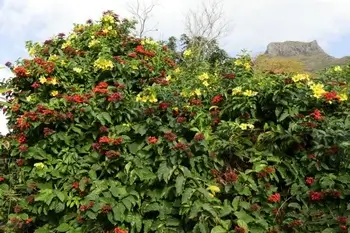
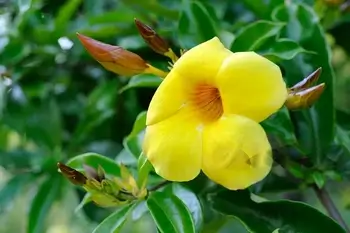
Golden Trumpet is the first plant I show anyone asking for yellow flowers. It’s a thick, bushy climber that looks very “paisa vasool” (worth the money) because it stays green all year. The flowers are huge, like a bright yellow bell. It loves the Indian sun—the more heat it gets, the more it blooms.
Expert Tips: I’ve found that it grows much better if you mix a little bit of cow dung manure (gobar khaad) into the soil once a month. If you’re growing it on a balcony, just make sure your pot is big enough, or the roots will get frustrated.
Uses: Balcony grills, Main gates, Compound walls
2. Carolina Jessamine
| Name | Description |
|---|---|
| Common Names | Yellow Jessamine, Evening Trumpet Flower |
| Scientific Name | Gelsemium sempervirens |
| Climate | Subtropical to Temperate |
| Size | Can grow up to 20 feet long |
| Shape | Delicate, trumpet-shaped twiner |
| Blooming Season | Late Winter to Early Spring |
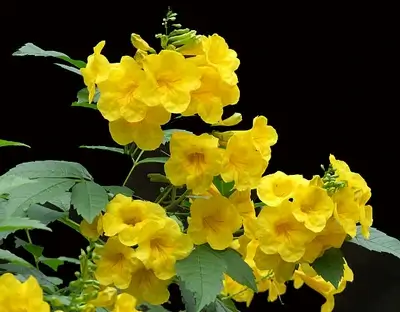
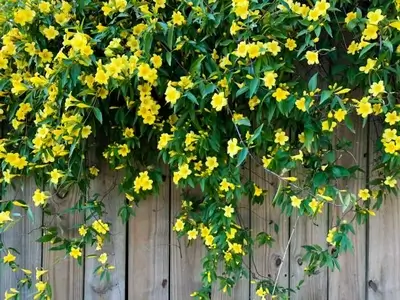
Carolina or Yellow Jessamine is for those who want flowers when everyone else’s garden become dormant. It starts blooming in late winter and early spring season. These yellow flowers are small, trumpet-shaped, and have a very sweet, calm, honey-like scent. This Jasmine variety is a “twining” climber, which means it likes to wrap itself around things like a snake.
Expert Tips: I always suggest other using a thin metal wire for this one—it looks beautiful when it wraps around a porch pillar.
Uses: Pillars, Small arches, Winter gardens
3. Yellow Butterfly Vine
| Name | Description |
|---|---|
| Common Names | Butterfly Vine, Gallinita |
| Scientific Name | Callaeum septentrionale (formerly Mascagnia macroptera) |
| Climate | Hot and Dry to Subtropical |
| Size | Can grow up to 12-15 feet long |
| Shape | Neat, twining climber |
| Flowering Season | Summer and Fall |
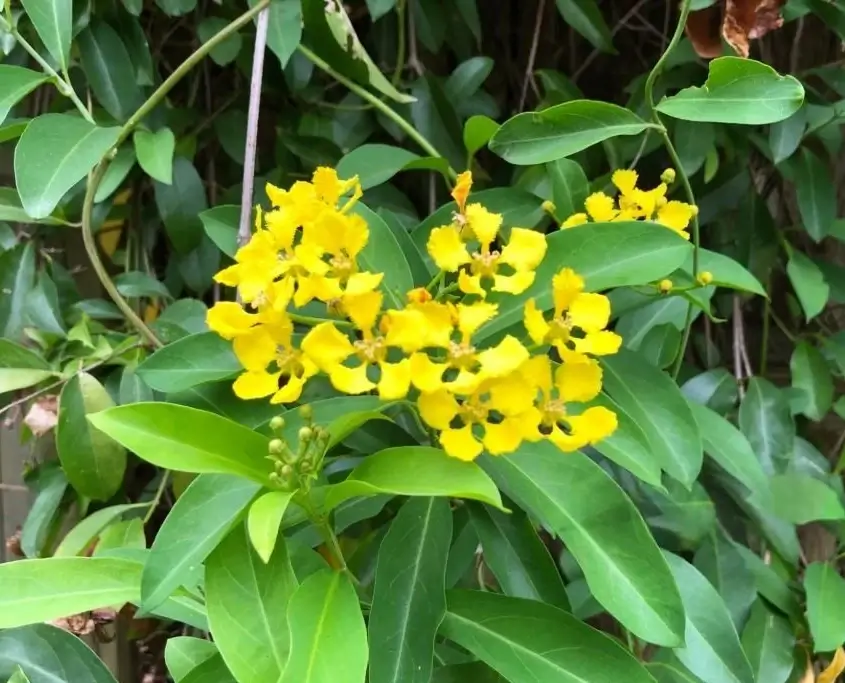
An interesting one, I love this plant because even after the flowers fall it looks nice. The seed pods look like little yellow-green butterflies! The flowers are a bright, cheerful yellow, they handle the North Indian hot summer wind (Loo) quite well. It’s a very tidy climber, so it won’t create a huge mess like some other vines.
Expert Advice: If you’re a beginner, this is a very “forgiving” plant to start with.
Uses: Garden arches, Low fences, Decorative screens
4. Yellow Trumpet Vine
| Name | Description |
|---|---|
| Common Names | Yellow Trumpet Creeper, Flava |
| Scientific Name | Campsis radicans ‘Flava’ |
| Climate | Hardy, Tropical to Temperate |
| Size | Can grow up to 30-40 feet long |
| Shape | Vigorous, woody |
| Flowering Season | Summer to Autumn |
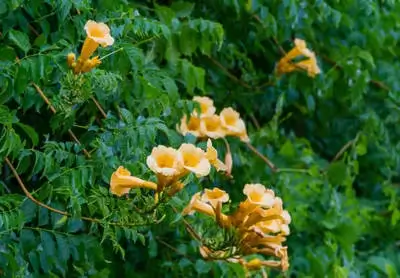
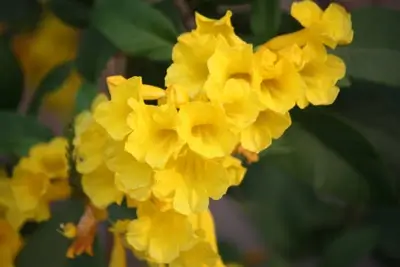
Most people know the orange one, but this yellow trumpet vine variety is much more sophisticated. It’s a woody climber, so it gets quite heavy and strong over time or as getting bigger. You’ll need a solid structure for this—don’t put it on a flimsy plastic net.
It attracts a lot of sunbirds and bees, which is great part if you want a “living” garden. Give it a good prune in the winter when it goes sleepy (dormant), and it will come back twice as strong in the spring.
Uses: Pergolas, Strong carports, Tree trunks
5. Cat’s Claw Vine
| Name | Description |
|---|---|
| Common Names | Cat’s Claw, Yellow Trumpet Vine |
| Scientific Name | Dolichandra unguis-cati (Macfadyena unguis-cati) |
| Climate | Tropical to Temperate |
| Size | Can grow up to 25-30 feet long |
| Shape | Self-clinging vine with tiny hooks |
| Flowering Season | Late Spring to Early Summer |
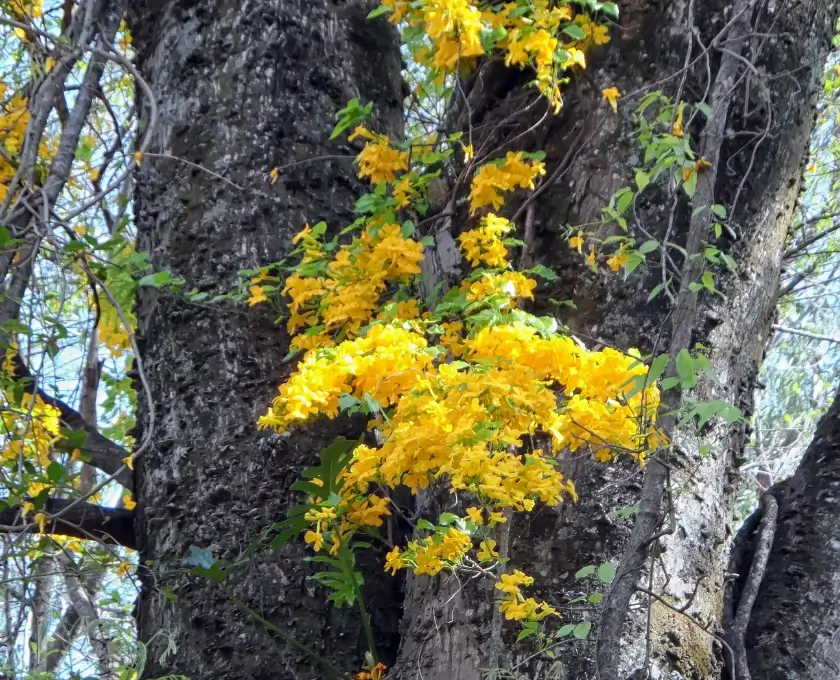
This plant looks a real “spider-man” plant! It has these tiny little hooks that look like a cat’s claw, which help it stick to even a plain cement wall without any wire or support. The yellow flowers are a bit smaller but they cover the whole plant like a golden carpet in the early summer.
Expert Tips: I always suggest people to be a bit careful with this vine—it’s a variety that grows vigorously. If you don’t trim it, it might reach your neighbor’s.
Uses: Concrete walls, Old buildings, Fence covering
6. Black-eyed Susan Vine
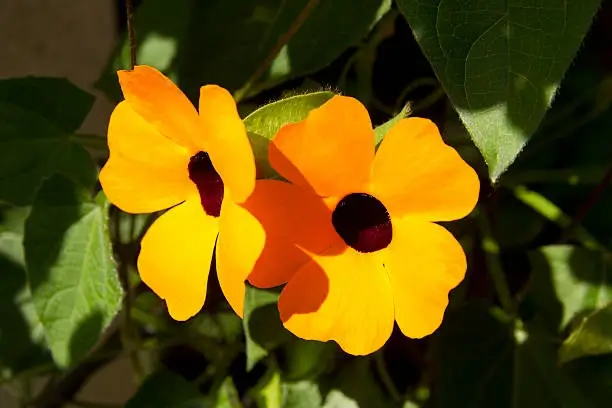
| Name | Description |
|---|---|
| Common Names | Black-eyed Susan, Thunbergia Vine |
| Scientific Name | Thunbergia alata |
| Climate | Warm and sunny |
| Size | 6 to 10 feet |
| Shape | Soft, light-weight vine |
| Flowering Season | Year-round (Peak in Summer) |
Thunbergia is a simple, cheerful, and grows very fast even beginners can grow easily. The popular Black-eyed Susan Vine, is a versatile creeper, native to tropical Africa, can grow up to 8 feet tall.
Thunbergia blooms from summer to autumn, it has heart-shaped leaves and vibrant flowers in orange yellow shades with dark centers. This is ideal for covering trellises and fences, enhancing the beauty of Indian gardens and balconies.
Expert Tips: Since this is a light plant, it is perfect for plastic nets or light wooden supports. It grows very fast from seeds too.
Uses: Small balcony grills, Hanging baskets, Window boxes.
7. Yellow Mandevilla
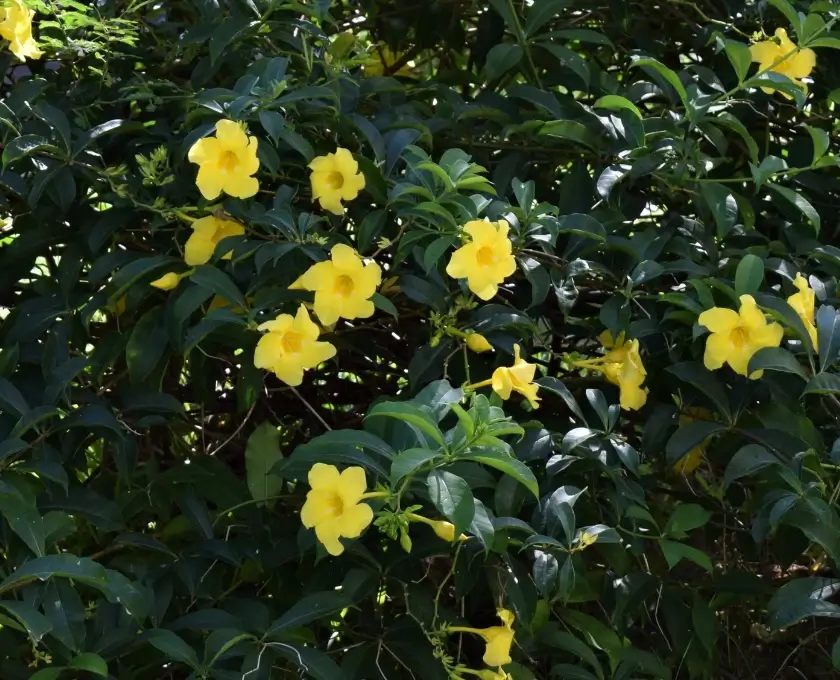
| Name | Description |
|---|---|
| Common Names | Wild Allamanda, Yellow Dipladenia |
| Scientific Name | Pentalinon luteum |
| Climate | Tropical and Subtropical |
| Size | Can grow up to 10-12 feet long |
| Shape | Slender, twining climber |
| Flowering Season | Summer to Early Fall |
A lot of people confuse this with Allamanda, but the Mandevilla is much more “nazaqat” (delicate) and elegant. The stems are thinner and it’s easier to manage if you have a small trellis. It has these shiny, dark green leaves that make the yellow flowers really pop.
Expert Tips: I’ve noticed it doesn’t like “wet feet,” so make sure not to overwater the plant. For check, just stick your finger in the soil; if it feels muddy, wait for a next-day before watering again.
Uses: Small trellises, Decorative pots, Apartment balconies
8. Tecoma
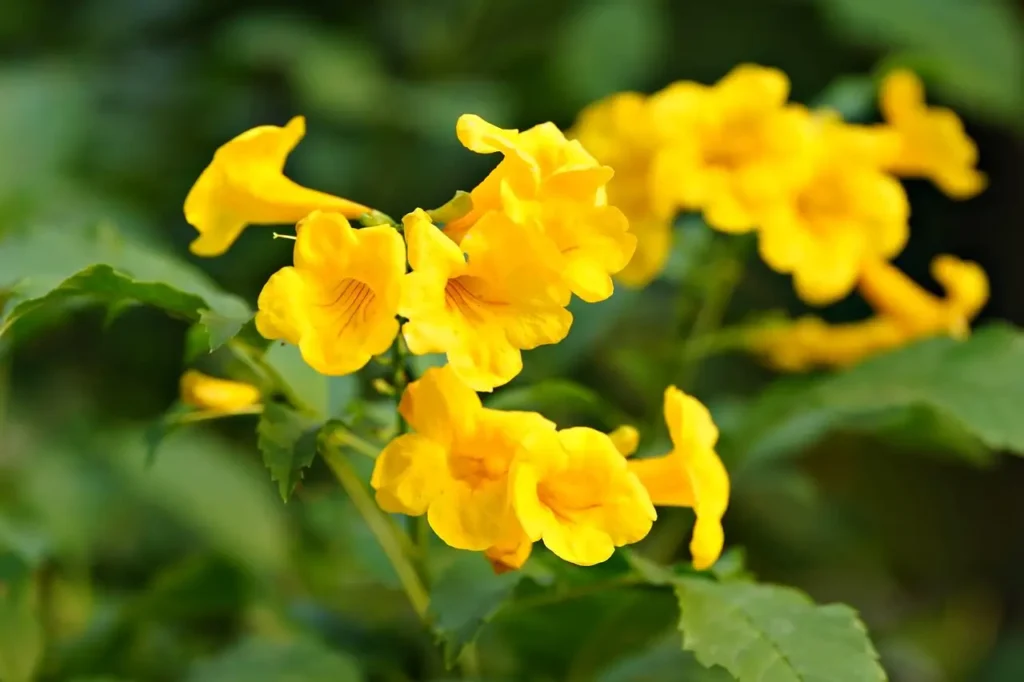
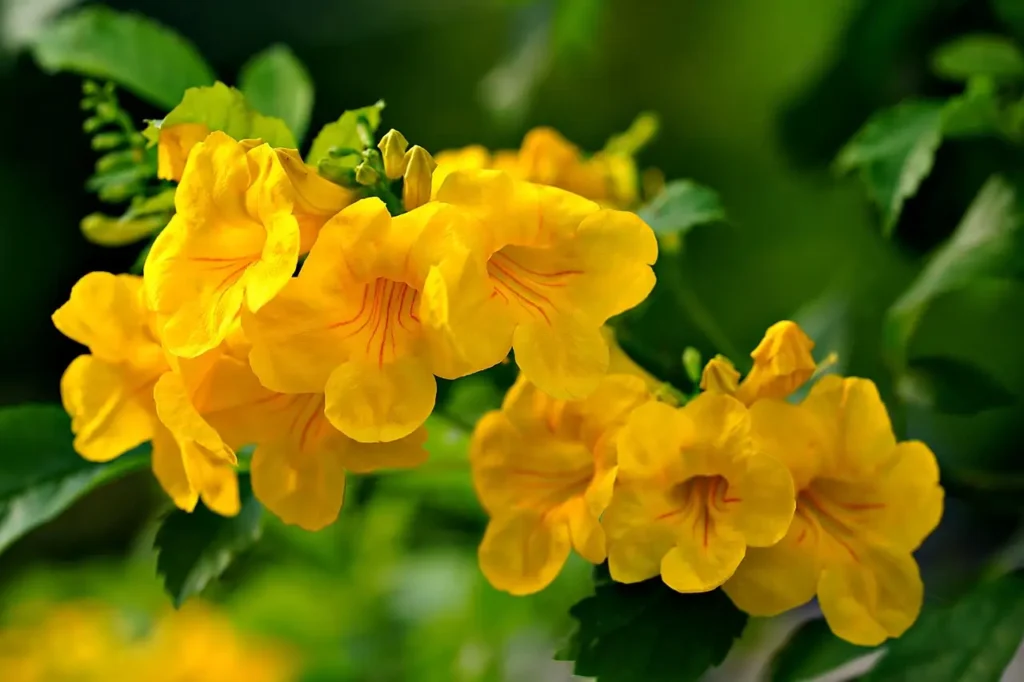
| Name | Description |
|---|---|
| Common Names | Sonpatti, Yellow Bells, Gauri Chauri, Tecoma |
| Scientific Name | Tecoma stans |
| Climate | Loves the Indian heat, very drought-tolerant |
| Size | Small tree or large shrub (5-15 feet) |
| Shape | Upright and bushy |
| Flowering Season | Almost all year, heavy in Summer and Monsoon |
Tecoma is like a “flower factory.” I call it a permanent winner because it is almost never without its bright yellow bells. Even in the middle of May, when the sun is burning everything else, Tecoma stands tall and keeps blooming. It is much more reliable than the Indian Tulip if you want constant color in a small space.
Expert Advice: Bees and sunbirds love this plant, so it brings more activity to your garden. One small tip: after the flowers fall, you’ll see long green seed pods. Cut them off. If the plant uses its energy to make seeds, it will produce fewer new flowers.
Where to plant: Grow it along your balcony for privacy or plant it in a large pot as the main plant.
9. Marigold (Genda)

| Name | Description |
|---|---|
| Common Names | Genda, Sayapatri |
| Scientific Name | Tagetes |
| Climate | Cool winters to mild summers |
| Size | 1 to 3 feet tall |
| Shape | Compact and bushy |
| Flowering Season | Peak in Winter (October to March) |
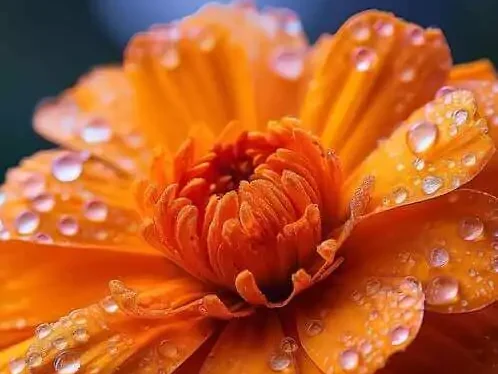
You cannot have an Indian home without Genda. Whether it’s for special event or a wedding, these are our most loved yellow flowers. They are very easy to grow from seeds—you can even dry a flower from a garland and sprinkle the seeds in a pot.
Expert Tips: These are “doctor plants” for your garden. Its always good to keep Marigolds near tomatoes or roses because the smell of the leaves keeps bad bugs away. Make sure they get at least 6 hours of direct sunlight.
Uses: Balcony pots, flower beds, pest control.
10. Yellow Hibiscus
| Name | Description |
|---|---|
| Common Names | Gurhal, Jaswand |
| Scientific Name | Hibiscus rosa-sinensis |
| Climate | Tropical and Humid |
| Size | 4 to 8 feet |
| Shape | Rounded shrub |
| Flowering Season | Year-round |
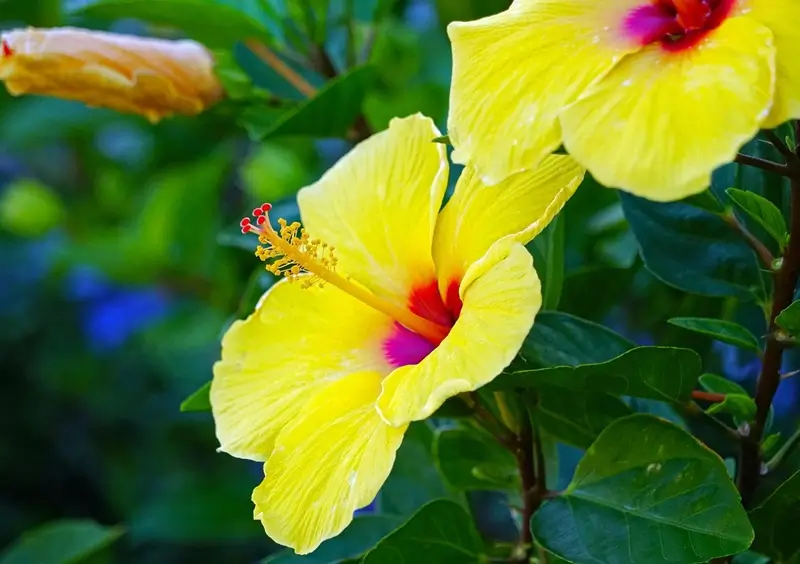
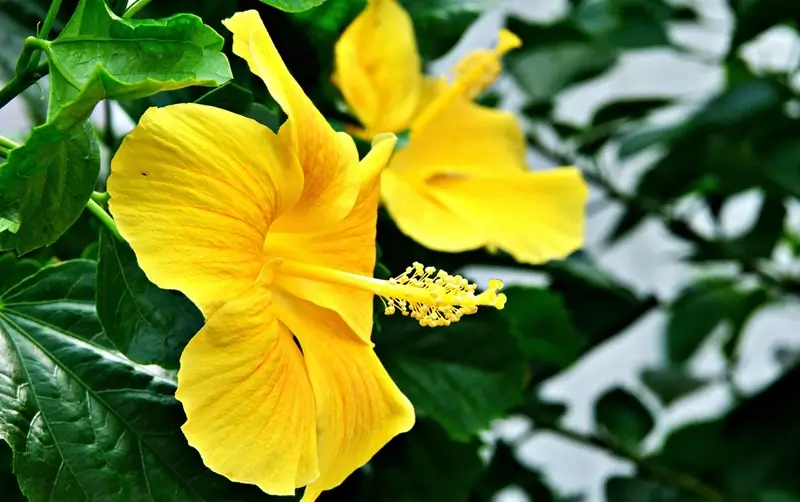
While the red one is common, the yellow Hibiscus looks very elegant in Indian homes. The flowers are large and can really make your garden stand out. It is a very easy-going plant need minimal care, but it does need a lot of sun to produce flowers. If you keep it in the shade, you will only see leaves but no blooms.
Expert Tips: I have noticed that hibiscus plant gets hungry for food. Just give it a little mustard cake liquid (sarson khali) once a month. It works like magic for the flower size. Also, if you see white bugs on the stems-don’t ignore, just wash them off with a strong water pipe.
Uses: Sunny balconies, terrace gardens, or near the main gate.
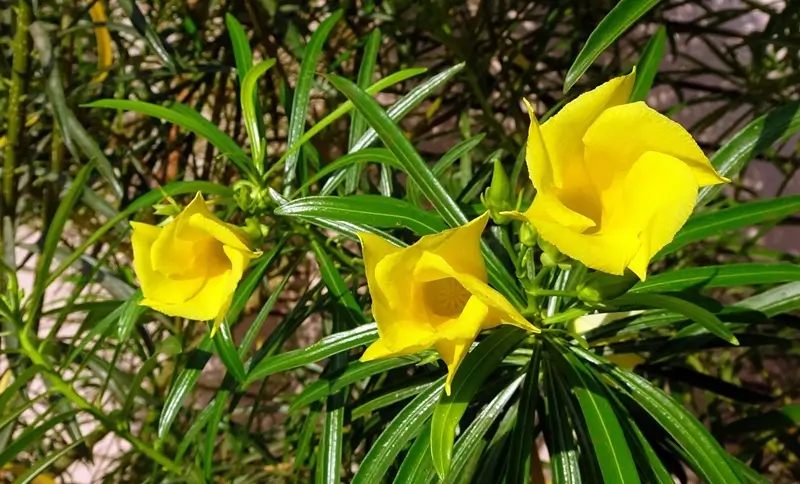
11. Yellow Oleander (Kaner)
| Name | Description |
|---|---|
| Common Names | Peela Kaner, Lucky Nut |
| Scientific Name | Cascabela thevetia |
| Climate | Handles extreme heat and dry air |
| Size | 8 to 15 feet tall |
| Shape | Tall, thick bush |
| Flowering Season | Throughout the year |
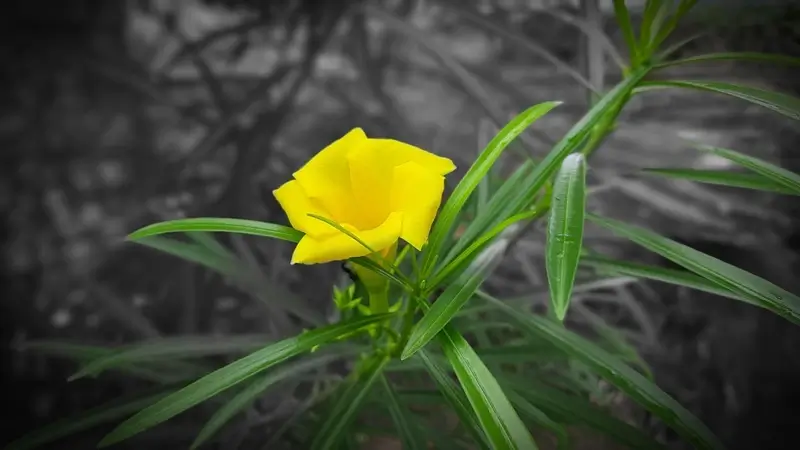
You will see Yellow Oleander (Peela Kaner) everywhere in India, from temple backyards to roadsides. It is a very tough plant that does not care about the heat or poor soil. The leaves are thin shape like needles and the yellow flowers look like small funnels. It is the best choice if you want a plant that looks good but you don’t have time to look after it every day.
Expert Tips: This plant is very hardy because its sap is bitter, so cows and goats will never eat it. This makes it perfect for your front boundary or outside the gate. Just a warning—the seeds and sap are poisonous, so make sure kids do not play with them or put them in their mouths.
Uses: Boundary walls, privacy screens, and low-maintenance gardens.
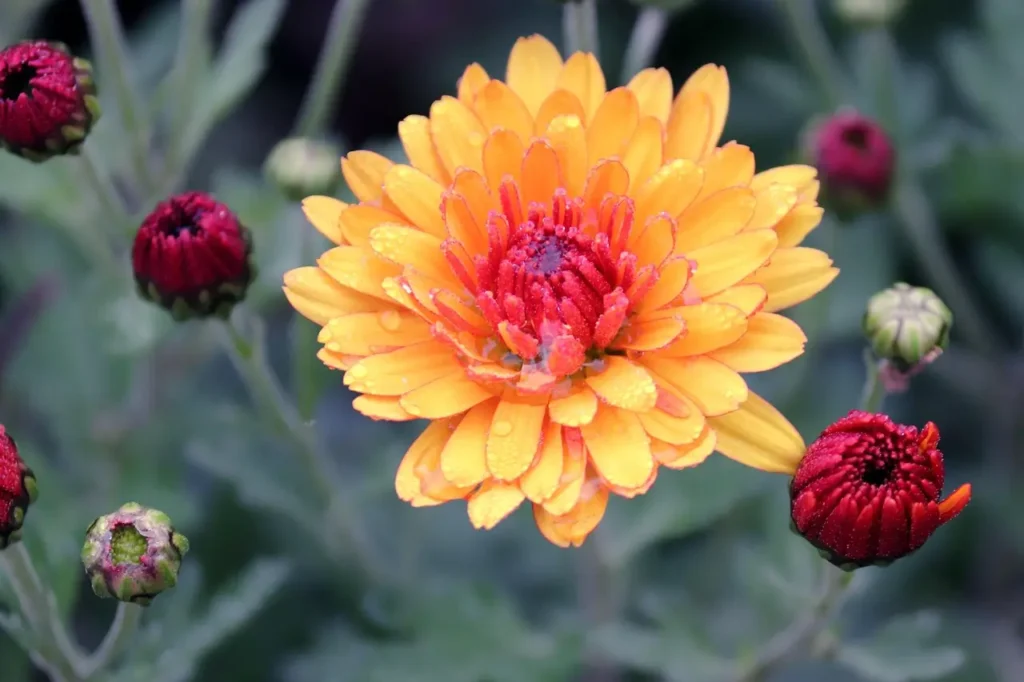
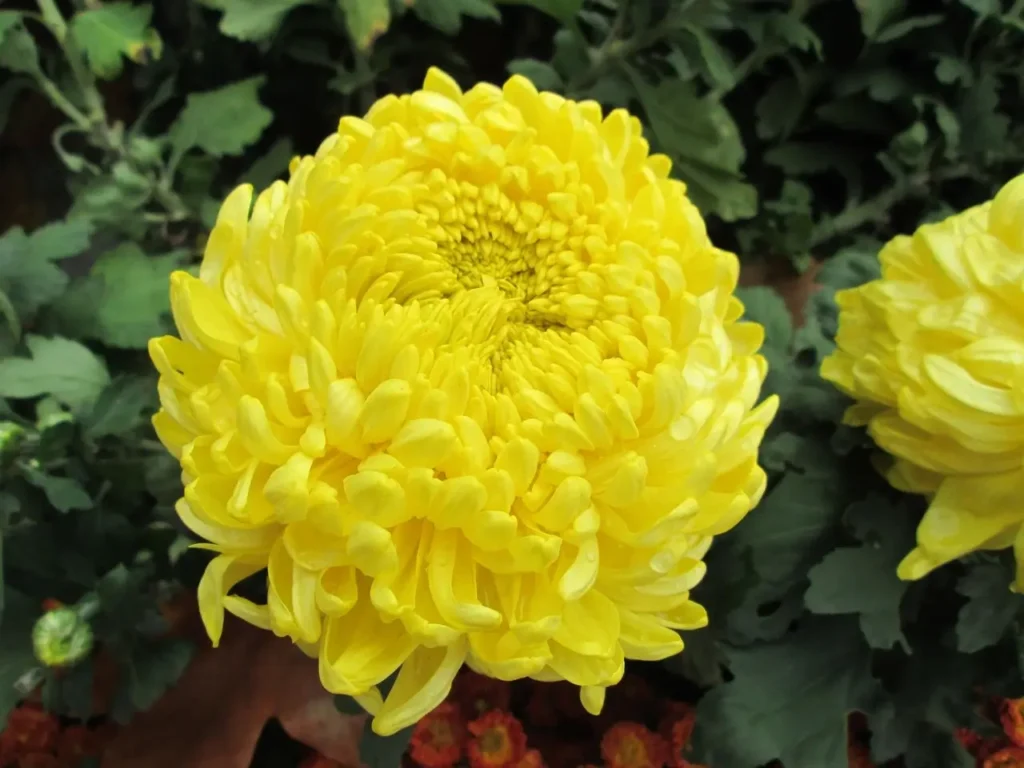
12. Yellow Chrysanthemum (Guldaudi)
| Name | Description |
|---|---|
| Common Names | Guldaudi, Mum |
| Scientific Name | Chrysanthemum |
| Climate | Loves the Indian winter chill |
| Size | 1 to 2 feet |
| Shape | Round, ball-like bush |
| Flowering Season | Winter (November to February) |
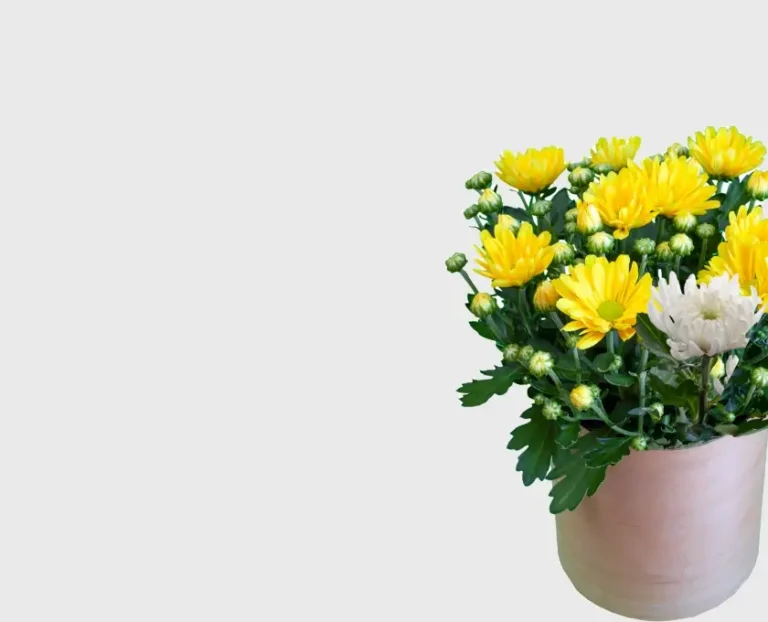
When the weather gets a bit cold, Guldaudi is the star of the show. In India, you can find these in almost every nursery once October hits. The Yellow Chrysanthemums are very popular because they stay bright even on foggy days. Sometimes this plant stays short and gets so many flowers that you sometimes can’t even see the green leaves underneath.
Expert Tips: If you want a really thick bush with lots of flowers, you have to “pinch” it. When the plant is small, just break off the top inch of the stem with your fingers. This makes the plant grow more branches from the sides. Also, try not to get water on the leaves; to keep the plant stays healthy always pour it directly into the soil.
Uses: Window boxes, small pots, and front rows of flower beds.
If you really love these winter beauties, I have written a complete guide on Yellow & White Chrysanthemum that covers all the different varieties and how to keep them blooming for a long time.
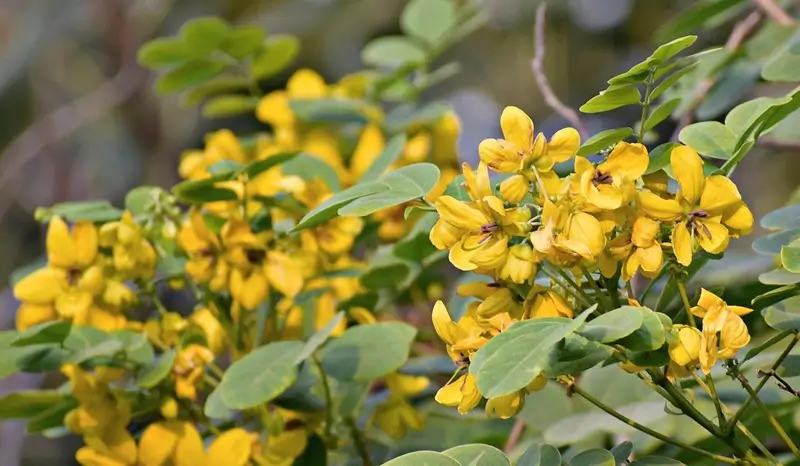
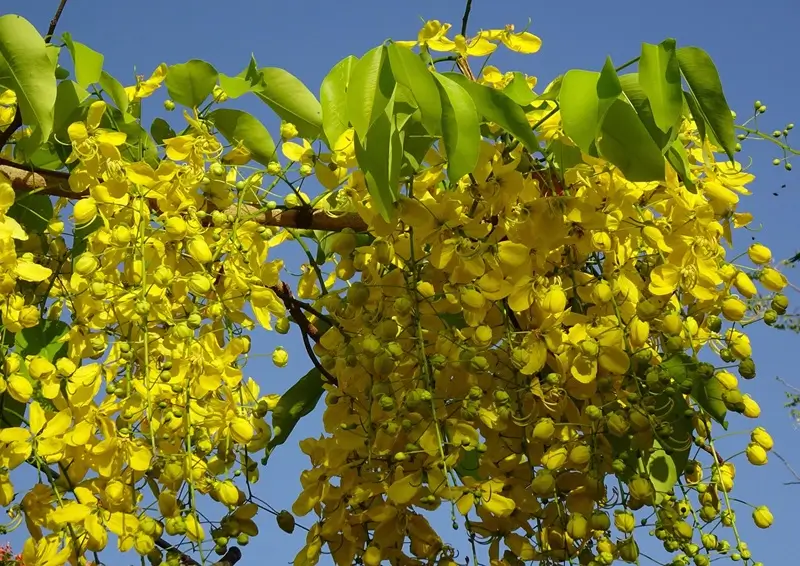
13. Amaltas (Golden Shower)
| Name | Description |
|---|---|
| Common Names | Amaltas, Garmalo, Golden Shower Tree |
| Scientific Name | Cassia fistula |
| Climate | Loves hot, dry summers |
| Size | 20 to 30 feet (Large tree) |
| Shape | Spreading branches with hanging flowers |
| Flowering Season | Peak Summer (April to June) |
Amaltas is the true king of the Indian summer. When everything else is drying up in the heat, this tree turns completely yellow. The flowers hang down like golden showers or clusters. In initially stage its behave as a slow grower, but once it settles, it doesn’t ask for much.
Expert Tips: Plant this only if you have a ground garden or a very large open space. So don’t plant it in a small pot or a tiny balcony. It needs space in the ground. It’s a native tree, so it doesn’t need fancy fertilizers—make sure you give it space to breathe and plenty of sun.
Uses: Shade tree, front yard, avenue planting.
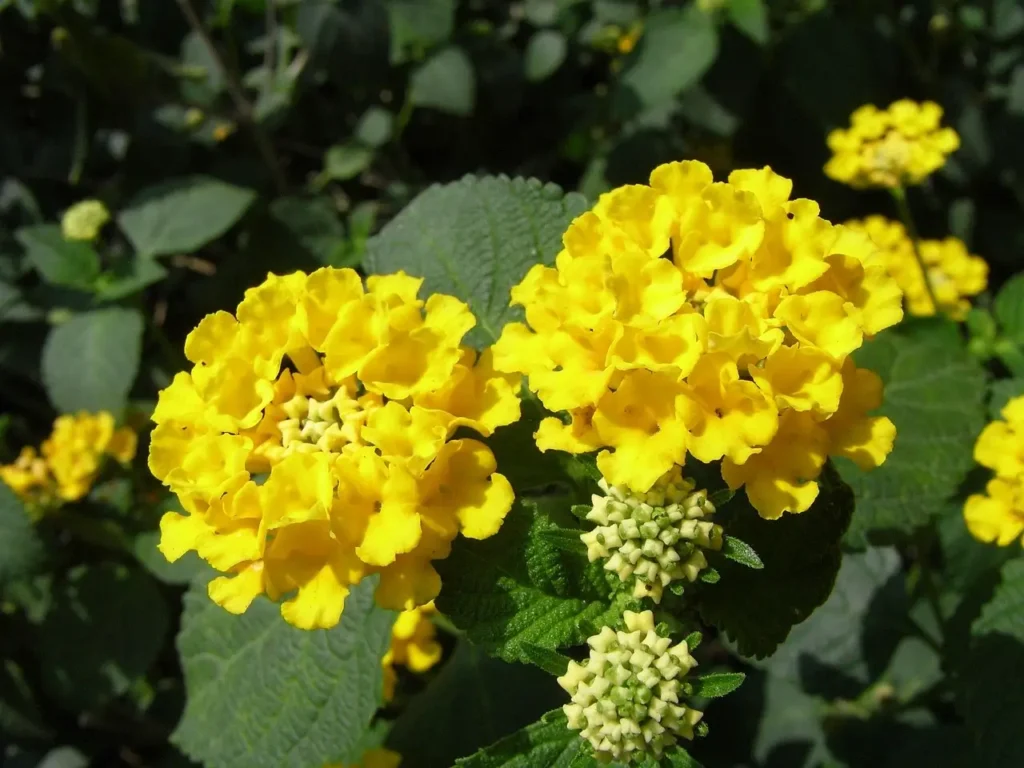
14. Lantana

| Name | Description |
|---|---|
| Common Names | Tantani, Ghaneri, Rai Muni |
| Scientific Name | Lantana camara |
| Climate | Grows anywhere in India |
| Size | 2 to 4 feet |
| Shape | Spreading, messy bush |
| Flowering Season | All year round |
Lantana is a tough Indian native that flowers even if you ignore it. The yellow variety stays very bright. It is one of the best plant if you want to see butterflies beauty in your garden, as they love the tiny flowers.
Expert Tips: This is fast growing plant that needs a regular maintenance. So make sure to prune it every few months to keep it in a nice shape. Give it a full sun to produce more flowers. As its a hardy nature, so you don’t need to worry about any special soil or expensive fertilizers.
Uses: Ground cover, hanging baskets, or butterfly gardens.
15. Sunflowers (Surajmukhi)
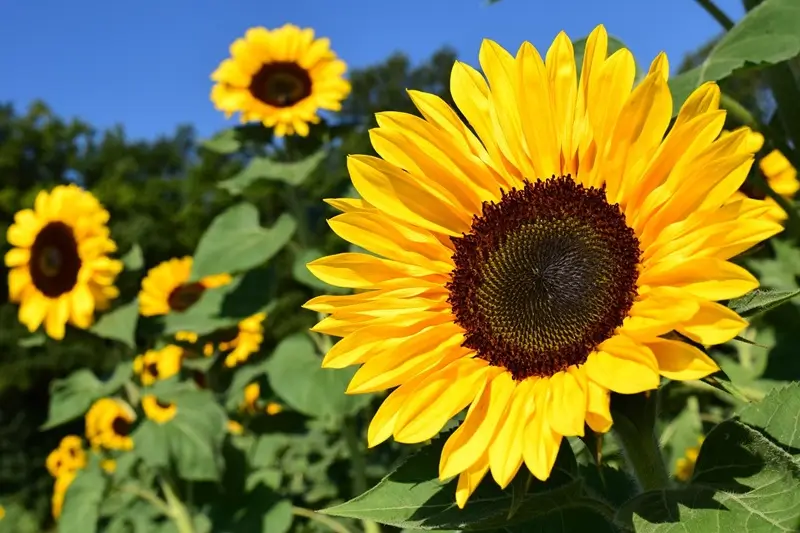
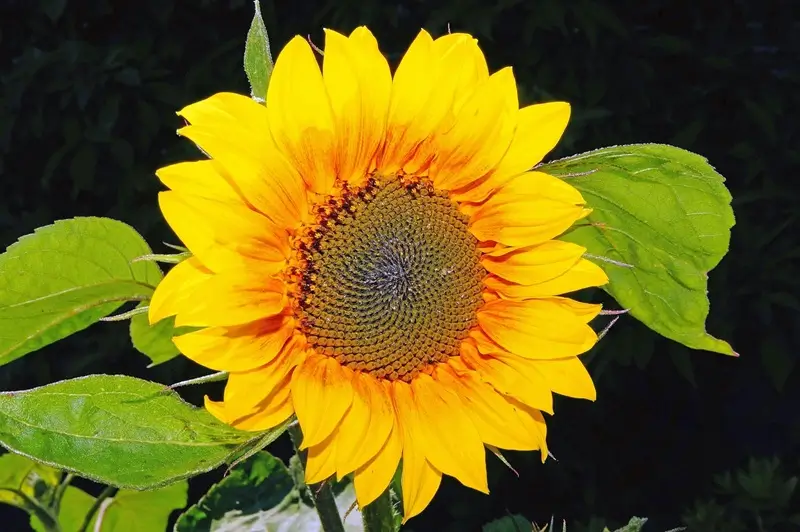
Sunflowers are pure joy in a pot. They are famous for “watching” the sun, moving their heads to follow it from morning to evening. For Indian homes, they are great because they love the heat.
Expert Tips: Since these plants become tall with heavy heads, sometimes they can bend or fall over mostly when it gets windy. To keep it stand you can tie the main stem to a simple bamboo stick or a plastic pipe for support. Also, make sure they get plenty of water during the hot months, or the leaves will start to droop very quickly.
Uses: Back rows of gardens, sunny corners, or large terrace buckets.
Quick Care: Getting Started the Right Way
If you are new to gardening, don’t overthink it. Most of these yellow plants are very hardy and used to the Indian weather. Just follow these three basics to keep them happy:
- The Pot Size: If you aren’t planting in the ground, use a large pot (at least 12–14 inches). Plants like Allamanda or Tecoma have big roots. If their “home” is too small, they will stop growing and won’t give you many flowers.
- Sunshine is King: 90% of these yellow bloomers need at least 5 to 6 hours of direct sun. Yellow flowers are like solar panels—they need that heat to produce their bright color. If you put them in a dark corner, you will get plenty of green leaves but zero flowers.
- The Support System: For the climbers in this list (like the Butterfly Vine or Cat’s Claw), you need to give them a hand. Use a wooden stick, an iron grill, or even a strong coconut rope (jute) to show them where to climb. Once they catch hold, they will take off on their own.
Maintenance Tips: Secrets for More Flowers
- Fertilizer: Once a month, dig the top inch of soil and add two handfuls of Cow Dung Manure or Vermicompost. Give a little bit of banana peel water right before the blooming season, it works wonders for flowers.
- Trimming (Pruning): Cutting the “leggy” branches helps the plant become bushy. Always trim right after the flowers finish blooming is a necessary part.
- Watering Logic: During the June heat, water them every day. But in the monsoon, let the soil dry out a bit. If the roots stay “drowned” the plant will drop its leaves.
Conclusion
Yellow flower plants can bring a touch of sunshine and natural beauty to your garden. When you keep eye, take good care of these plants and provide the right conditions, they’ll reward you with a constant beautiful blooms.